En el mundo de la automatización industrial, los sistemas integrados en vehículos o los entornos exteriores, la elección de un Panel PC estable y fiable es una decisión crítica. Con dos arquitecturas de refrigeración dominantes (Panel PC sin ventilador y Panel PC refrigerado por ventilador), la elección correcta depende de su escenario de uso específico. Este artículo explora las diferencias técnicas, la idoneidad de la aplicación, consejos de selección y mucho más para ayudarle a tomar una decisión informada.
Descripción general del diseño de refrigeración de PC de panel
¿Qué es un Panel PC sin ventilador?
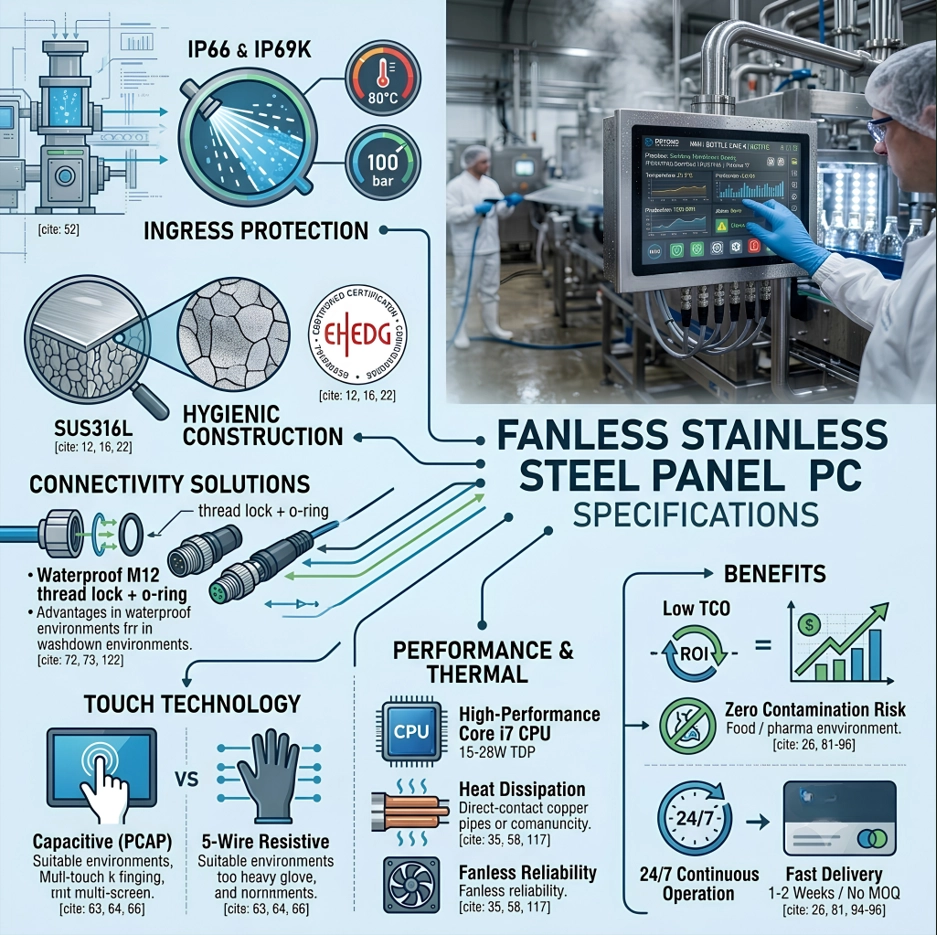
Un panel PC sin ventilador utiliza un sistema de refrigeración pasivo que disipa el calor a través de disipadores o del propio chasis de aluminio. Este tipo de diseño elimina las piezas móviles, minimiza la acumulación de polvo y reduce la posibilidad de fallos mecánicos, por lo que resulta ideal para entornos polvorientos, propensos a las vibraciones o sensibles al ruido.
¿Qué es un Panel PC refrigerado por ventilador?
Los PC de panel refrigerados por ventilador utilizan refrigeración activa con ventiladores integrados para disipar el calor rápidamente. Estos sistemas admiten CPU de alto rendimiento y varias tarjetas de expansión, lo que los hace idóneos para la informática de inteligencia artificial, aplicaciones con gran volumen de datos y entornos industriales exigentes.
¿Por qué es importante el diseño de la refrigeración?
Una gestión térmica eficaz garantiza un funcionamiento ininterrumpido a largo plazo, evita que el hardware se ralentice o se dañe, y es vital para las operaciones de misión crítica ininterrumpidas en todos los campos industriales.
Diferencias técnicas entre PC con y sin ventilador
Mecanismo de refrigeración y diseño estructural
Los PC sin ventilador se basan en la conducción térmica de estado sólido, a menudo a través de exteriores de aluminio con aletas. Estos sistemas están sellados para proteger los componentes internos del polvo y la suciedad. Los sistemas refrigerados por ventilador utilizan el flujo de aire para eliminar el calor, lo que permite una mayor potencia de la CPU pero requiere una ventilación adecuada.
Compromisos de rendimiento, potencia y estabilidad
Los modelos refrigerados por ventilador admiten procesadores potentes como Intel i7/i9 o módulos de GPU para cargas de trabajo de IA. Los sistemas sin ventilador priorizan el bajo consumo y la fiabilidad a largo plazo sobre la potencia de cálculo bruta.
Comparación de mantenimiento y vida útil
Los sistemas sin ventilador no tienen piezas móviles, lo que reduce los puntos de fallo y el mantenimiento. En cambio, los sistemas refrigerados por ventilador pueden requerir una limpieza periódica y la sustitución del ventilador para mantener un rendimiento óptimo.
Capacidad de ampliación y modularidad
Los sistemas refrigerados por ventilador suelen ser más modulares y admiten tarjetas adicionales, como GPU, tarjetas de captura o controladoras RAID. Esto los hace aptos para futuras actualizaciones. Los PC sin ventilador son más compactos e integrados, pero pueden tener vías de actualización limitadas.
Certificaciones y conformidad medioambientales
Los PC sin ventilador suelen estar diseñados con un nivel de protección IP65 o superior para resistir al agua y al polvo. Algunos también cumplen la norma MIL-STD-810G de tolerancia a golpes y vibraciones. Las unidades refrigeradas por ventilador, aunque potentes, requieren carcasas o armarios adicionales para una protección ambiental similar.
Entornos adecuados y casos de uso
Escenarios con mucho polvo, vibraciones y exteriores: La ventaja sin ventilador
Los Panel PC sin ventilador son la mejor opción para:
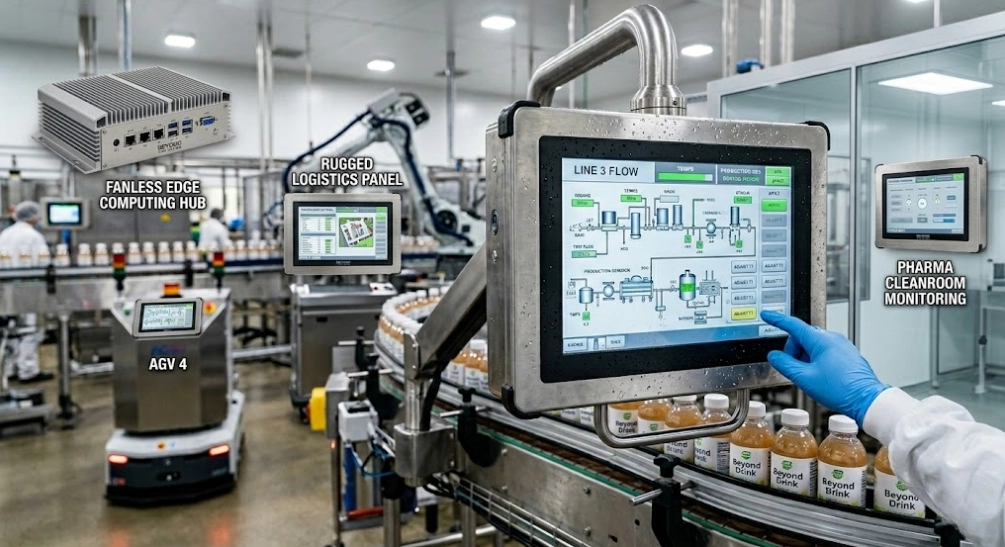
- Plantas de procesamiento de alimentos y bebidas (diseño higiénico, recintos sellados)
- Explotaciones mineras o industria pesada
- Agricultura inteligente y adquisición de datos en exteriores
- Sistemas de transporte público (informática a bordo)
Requisitos de alto rendimiento: Refrigeración por ventilador
Los sistemas refrigerados por ventilador destacan en:
- Visión artificial y robótica
- Sistemas de inspección basados en IA
- Vigilancia inteligente y análisis de seguridad
- Automatización industrial con control multieje
Estudios de casos reales
- Caso 1: Una planta de envasado de alimentos sustituyó los sistemas HMI heredados por Panel PC sin ventilador con clasificación IP65 de Beyond Info System, lo que evitó tiempos de inactividad por polvo o lavados.
- Caso 2: Un fabricante de semiconductores instaló sistemas refrigerados por ventilador integrados con módulos de inferencia de IA para la inspección de obleas en tiempo real. El calor adicional de las GPU requería refrigeración activa para mantener la precisión.
- Caso 3: Una autoridad de transporte público adoptó PC robustos sin ventilador para el control de vehículos a bordo y el seguimiento por GPS. La resistencia a las vibraciones y el diseño sin ventilador garantizan un funcionamiento estable en entornos difíciles.
Cómo elegir el Panel PC adecuado
Evaluar en función de las necesidades operativas
Empiece con factores clave como las condiciones ambientales, las expectativas térmicas, las demandas de CPU/GPU, los puertos de E/S necesarios y el espacio de montaje para determinar si es mejor un equipo sin ventilador o refrigerado por ventilador.
Coste y coste total de propiedad (TCO)
Aunque los PC sin ventilador pueden tener un coste inicial más elevado, su mayor vida útil y sus menores necesidades de mantenimiento pueden traducirse en un menor coste total de propiedad con el tiempo. Los modelos refrigerados por ventilador ofrecen un alto rendimiento con una inversión inicial potencialmente menor.
Consejos de expertos: Las 5 consideraciones principales
- Resistencia al entorno (polvo, vibraciones, temperatura)
- Requisitos de funcionamiento continuo
- Especificaciones de rendimiento (CPU, memoria, GPU)
- Tolerancia al ruido y limitaciones de instalación
- Asistencia de proveedores, personalización y disponibilidad a largo plazo
Preguntas más frecuentes (FAQ)
¿Se sobrecalentará un PC sin ventilador?
Con una ingeniería térmica adecuada y el cumplimiento de las directrices de instalación, los PC sin ventilador funcionan de forma segura y eficiente incluso en condiciones exigentes.
¿Se puede utilizar un PC refrigerado por ventilador al aire libre?
A menos que estén diseñados con carcasas con clasificación IP, los modelos refrigerados por ventilador no se recomiendan para entornos exteriores difíciles. Los sistemas sin ventilador con diseños sellados son más adecuados.
¿Qué tipo de Panel PC dura más?
Los sistemas sin ventilador suelen tener una vida útil más larga debido al menor número de componentes mecánicos y a las mínimas necesidades de mantenimiento.
¿Son compatibles los PC sin ventilador con la aceleración multipantalla o GPU?
Algunos diseños avanzados sin ventilador admiten una GPU limitada o doble pantalla, pero no pueden igualar la flexibilidad de los sistemas con refrigeración activa y ranuras PCIe dedicadas.
¿Qué sectores se benefician más de los diseños sin ventilador?
Industrias como la alimentaria y de bebidas, la médica, la logística y el transporte requieren a menudo sistemas sin ventilador por razones de higiene, silencio o tolerancia ambiental.
Productos destacados: Panel PC Beyond Info System
Modelos de Panel PC sin ventilador
Beyond ofrece una gama de Panel PC sin ventilador construidos con paneles táctiles planos con clasificación IP65, amplio soporte de temperatura y chasis resistente a las vibraciones, ideales para fabricación inteligente, integración de vehículos y sistemas de control de energía.
Modelos de alto rendimiento refrigerados por ventilador
Para los usuarios que necesitan compatibilidad con GPU o procesamiento de alta velocidad, Beyond ofrece PC refrigerados por ventilador con CPU Intel Core i7/i9 y arquitectura preparada para ampliaciones, perfectos para visión artificial, centros de control y centros de automatización.
Soluciones especializadas: Diseños resistentes
Los robustos Panel PC de Beyond superan los estándares MIL-STD-810G, con opciones de resistencia al agua, absorción de impactos y despliegue a largo plazo en entornos militares o de infraestructuras críticas.