In the era of Industry 4.0 and the Artificial Intelligence of Things (AIoT), the demand for reliable, high-performance computing at the “edge” has never been higher. While consumer-grade desktops are fine for an office setting, they quickly fail when exposed to the dust, vibrations, and extreme temperatures of a factory floor or an outdoor kiosk.
This is where the Box PC integrado comes in. But what exactly defines these rugged machines, and how do they differ from the PC sitting on your desk? In this guide, we will break down the fundamental definitions, CPU architectures, I/O interfaces, and application characteristics that make the Box PC the backbone of modern industrial automation.
Introduction: What Is an Embedded Box PC?
Defining the Embedded Box PC
En Box PC integrado is a ruggedized, small-form-factor industrial computer designed to perform specific control or data processing tasks within a larger mechanical or electrical system. Unlike tower PCs, Box PCs are “headless” (often operating without a dedicated monitor) and are built to be integrated into cabinets, vehicles, or machines.
The hallmark of a true Embedded Box PC is its diseño sin ventilador. By removing moving parts like cooling fans and traditional hard drives, these systems achieve a level of reliability that consumer electronics simply cannot match. They are built for longevity, often boasting a lifecycle of 7 to 10 years.
Embedded vs. Industrial PC: What’s the Difference?
While the terms are often used interchangeably, there is a nuance. A traditional PC industrial (IPC) might still look like a 19-inch rackmount server or a large workstation with fans. An Box PC integrado, however, focuses on:
- Compactness: Space-saving footprints for tight installations.
- Recintos sellados: Protecting internal components from environmental contaminants.
- Dedicated Functionality: Optimized for specific tasks like gateway communication or AI inference rather than general-purpose office work.
Core Architecture: The Brain of a Box PC
CPU Architectures: x86 vs. ARM
The “brain” of your Box PC dictates its power efficiency and software compatibility. Choosing between x86 and ARM is the most critical decision in the hardware selection process.
| Característica | x86 Architecture (Intel / AMD) | ARM Architecture (NXP / Rockchip / NVIDIA) |
| Performance | High to Ultra-high; handles complex multitasking. | Moderate; optimized for specific instruction sets. |
| Consumo de energía | Higher (15W to 65W+ TDP). | Ultra-low (Typically < 15W). |
| Soporte OS | Windows 10/11 IoT, Linux (Ubuntu, RedHat). | Android, Linux (Debian, Yocto). |
| Best For | Machine Vision, Edge Servers, High-speed Automation. | IoT Gateways, Digital Signage, Mobile Devices. |
Thermal Design: Why Fanless Matters
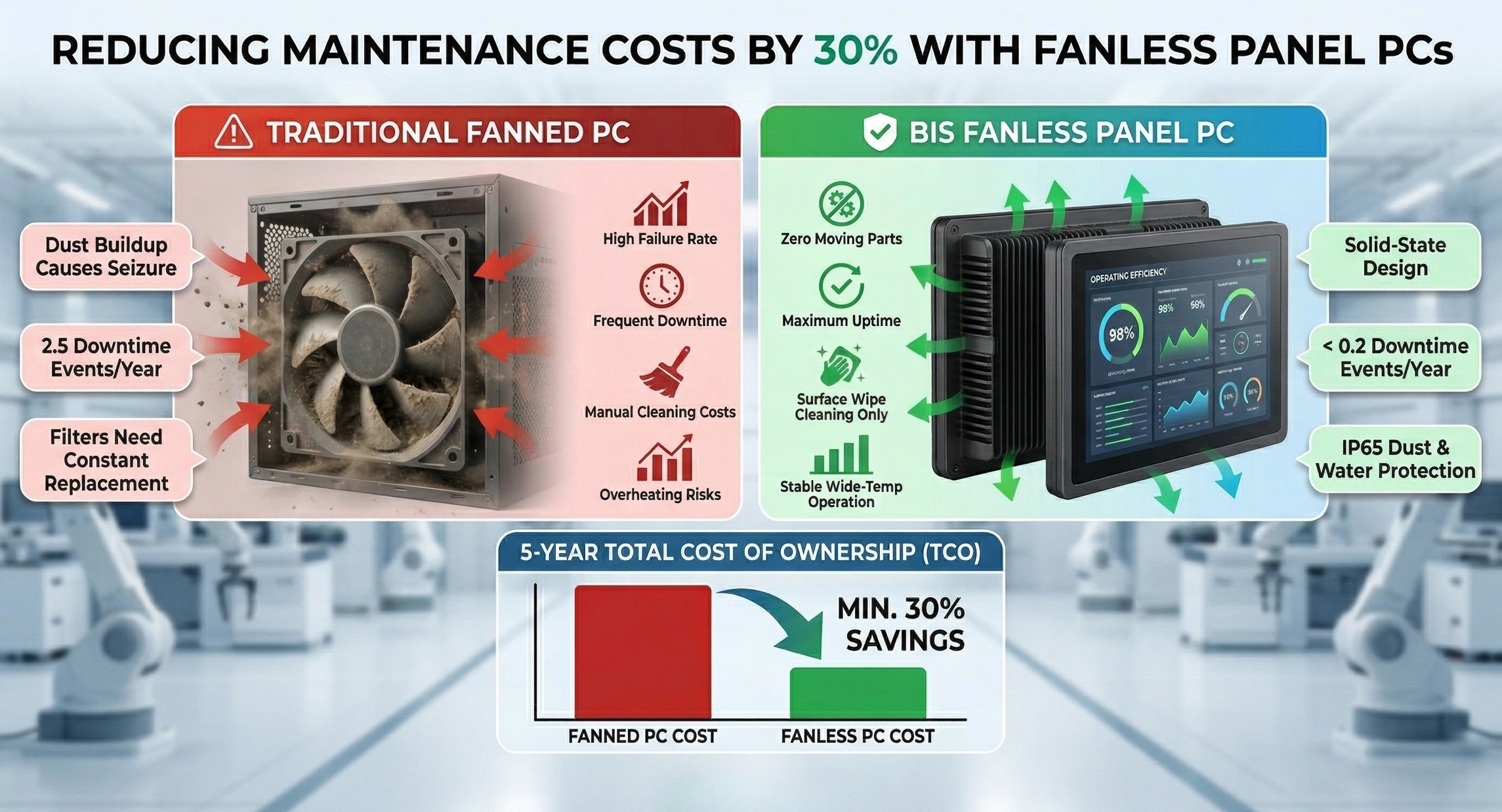
In industrial settings, dust is the silent killer of electronics. Fans suck in debris, which eventually coats the motherboard, leading to overheating and hardware failure.
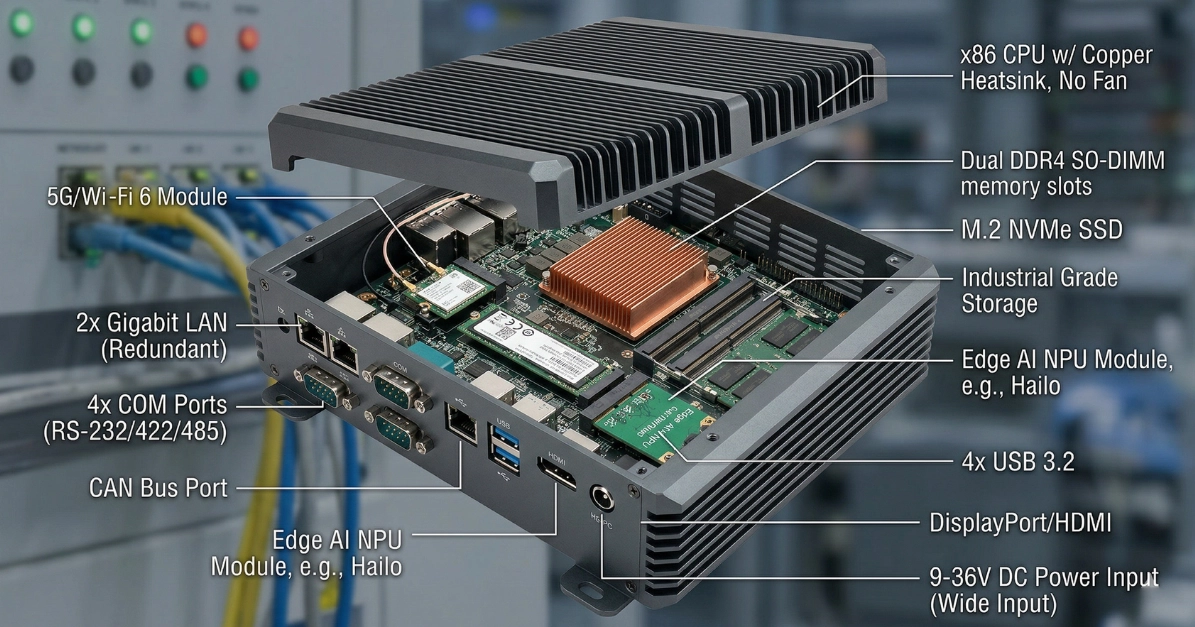
Embedded Box PCs utilize “Passive Cooling.” The chassis itself—usually constructed from high-grade aluminum with integrated fins—acts as a giant heat sink. Thermal pads transfer heat directly from the CPU to the outer casing, where it dissipates into the air. This sealed design allows the PC to operate in “dirty” environments like flour mills, textile factories, or outdoor roadside units without risk of clogging.
Essential I/O Interfaces and Connectivity
Industrial Communication Ports (COM, LAN, CAN bus)
In the world of Embedded PCs, connectivity is about more than just USB ports. Industrial machines often rely on legacy protocols that require specific physical interfaces:
- Serial Ports (RS-232/422/485): Essential for communicating with legacy PLCs (Programmable Logic Controllers) and CNC machines.
- Dual/Multiple Gigabit LAN: Essential for network redundancy. One port handles the internal machine network (LAN), while the other connects to the factory’s ERP or cloud system (WAN).
- CAN bus: Primarily used in automotive and heavy machinery for real-time communication between microcontrollers without a host computer.
Modern Expansion: M.2, PCIe, and Wireless
Future-proofing is a core requirement for BIS customers. Modern Box PCs feature internal expansion slots to add functionality as project needs evolve:
- M.2 / Mini-PCIe: Used for adding 5G, Wi-Fi 6, or LoRaWAN modules for wireless data transmission.
- AI Accelerators: By installing a module like a Hailo-8 o Intel Movidius, a standard Box PC becomes an Edge AI Inference powerhouse capable of real-time object detection.
Key Application Characteristics in Extreme Environments
Ruggedized Design: Shock and Vibration Resistance
Industrial PCs are often mounted on moving parts or near heavy machinery that creates constant vibration.
- Cable-less Design: High-quality Box PCs minimize internal wiring, as cables can wiggle loose over time.
- Solid State Storage: Using Industrial SSDs instead of mechanical HDDs eliminates the risk of disk crashes due to physical impact.
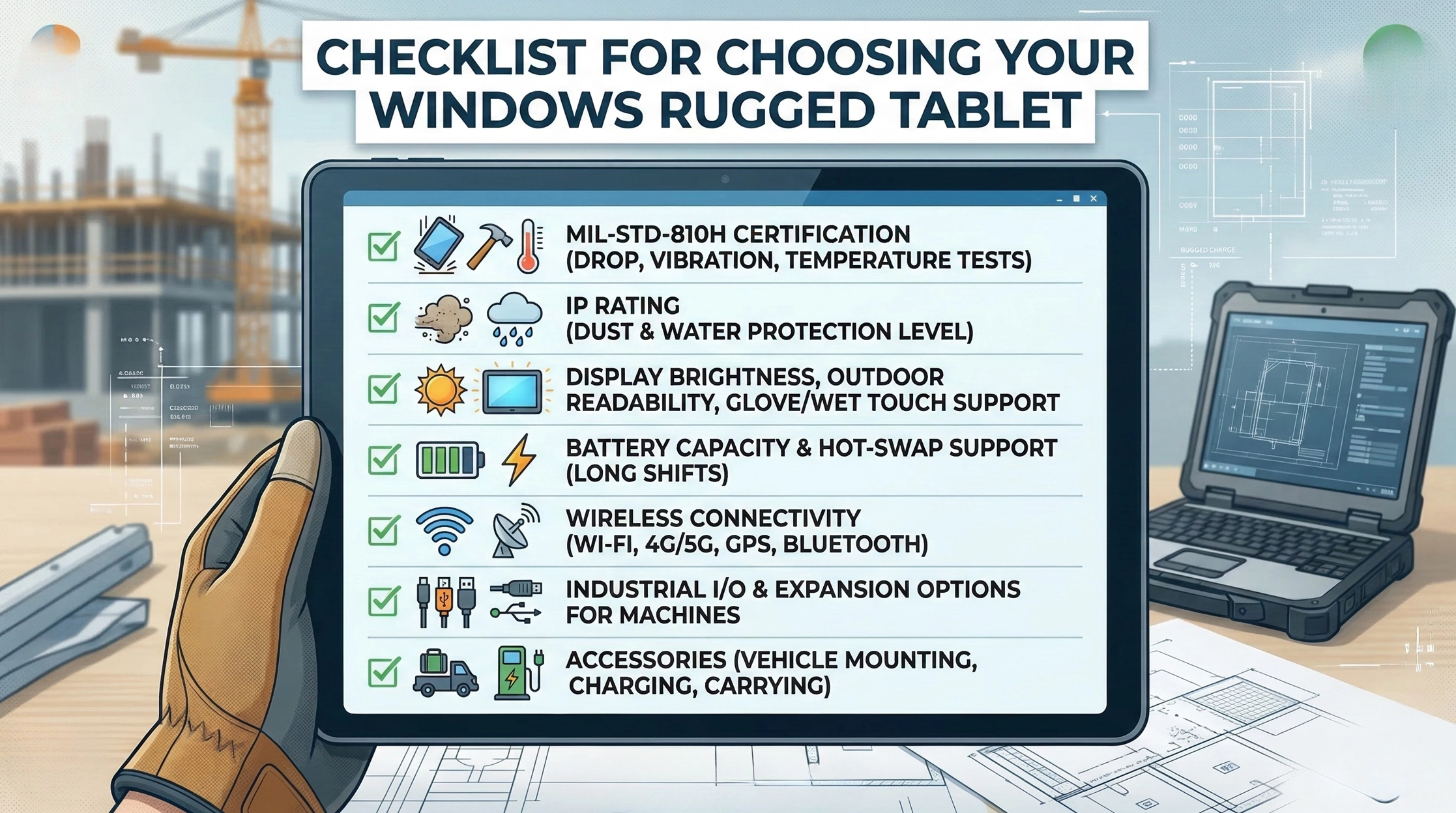
- Compliance: Many Más allá del sistema de información products meet MIL-STD-810G standards, ensuring they can survive drops and high-frequency vibrations in transit or on the factory floor.
Wide Temperature Support (W.T.)
Standard electronics fail when temperatures drop below freezing or rise above $40°C$. Embedded Box PCs are engineered with wide-temperature components that allow operation from -40°C a 70°C. This makes them ideal for:
- Outdoor Kiosks: Exposed to direct sunlight.
- Cold Storage: Used in food and pharmaceutical logistics.
- Desert Energy Sites: Monitoring solar or wind farm data.
Common Use Cases: Where Are Box PCs Deployed?
Factory Automation and Industry 4.0
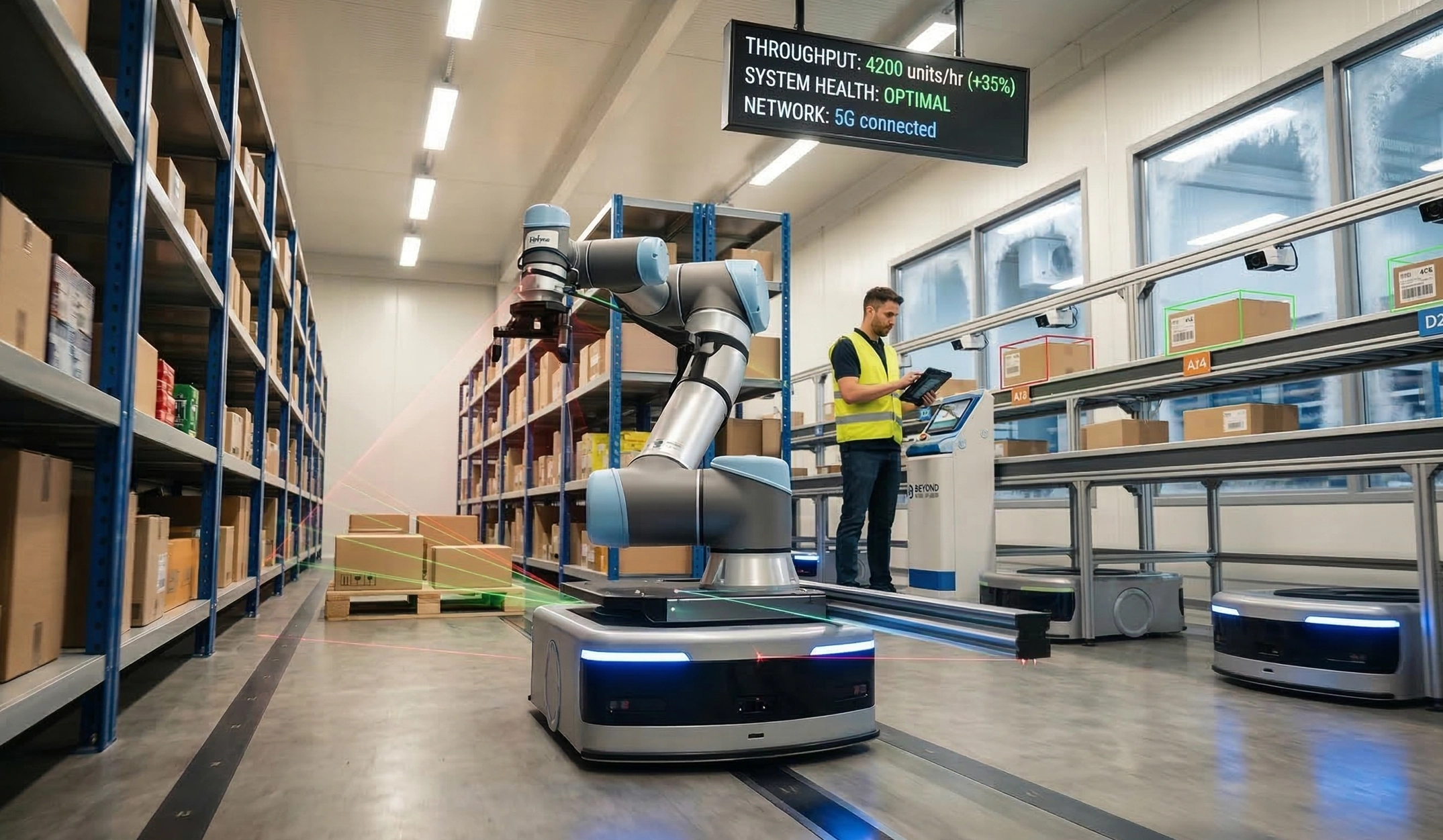
Box PCs act as the “Local Controller” on the assembly line. They collect sensor data, process it locally to reduce latency, and trigger actions in robotic arms. By using an embedded system, factories reduce the risk of downtime caused by centralized server failures.
Smart Transportation and Edge AI Computing
From autonomous shuttle buses to smart traffic lights, Box PCs provide the localized intelligence needed for safety. In transportation, they handle:
- In-vehicle Surveillance: Recording multiple camera feeds simultaneously.
- Predictive Maintenance: Analyzing engine vibrations to predict failures before they happen.
- Electronic Toll Collection (ETC): Processing high-speed image data at the highway edge.
Preguntas más frecuentes (FAQ)
How do I choose the right Embedded Box PC for my project?
Start by identifying your environmental constraints (Temperature, Dust, Vibration). Then, list your I/O requirements—how many sensors or cameras do you need to connect? Finally, consider the software: if you need a specific Windows-based legacy application, choose an x86 architecture.
Can an Embedded PC run standard Windows or Linux?
Yes. Most industrial box PCs use standard x86 processors, making them compatible with Windows 10 IoT Enterprise and various Linux distributions (Ubuntu is the most popular). ARM-based systems typically run customized Linux or Android builds.
What is the typical lifespan of an industrial box PC?
Unlike consumer PCs that are replaced every 3 years, industrial systems are designed for long-term availability. This means the specific CPU and motherboard will be manufactured for 7 to 15 years, ensuring you can buy the exact same replacement part a decade from now.
Empowering Your Business with Beyond Info System (BIS)
High-Performance Embedded Solutions from BIS
En Sistema de información Beyond (BIS), we understand that reliability isn’t just a feature—it’s a requirement. Our mission is to provide rugged, high-performance computing solutions that bridge the gap between complex data and actionable insights. Our engineering team focuses on maximizing heat dissipation and I/O flexibility to ensure your project stays online, no matter the conditions.
Featured Products & Customization Services
We offer a diverse portfolio of Embedded Box PCs tailored for various industries:
- Fanless Compact Series: Ideal for space-constrained IoT gateways.
- AI Edge Inference Boxes: Equipped with the latest NPU/GPU support for computer vision.
- Wide-Temp Rugged Series: Built for the most extreme outdoor deployments.
Más allá del sistema de información also provides Personalización OEM/ODM. Whether you need a specific branding, a unique I/O configuration, or specialized mounting brackets (DIN-rail, Wall-mount, or VESA), our team is ready to assist.
Página web oficial: www.beyondinfosys.com
Ready to upgrade your industrial infrastructure? [Request a Quote] today to find the perfect fit for your application.