Trends and Challenges in Smart Buildings and Energy Monitoring
Global Emphasis on Building Energy Efficiency
With the increasing urgency around climate change and carbon reduction, the building sector has become a critical focus for governments and enterprises worldwide. Smart buildings are leading the transformation by integrating technology to reduce energy consumption, increase operational efficiency, and enhance occupant comfort.
| Region/Country | Direction | Policy/Action Example |
|---|---|---|
| EU | Net-zero emission push | Building energy efficiency directives |
| USA | Commercial energy optimization | Energy Star, LEED certification |
| Asia (Taiwan) | Smart city development | Green Building Label, renewable integration |
Why Smart Energy Monitoring is Essential
Traditional buildings rely heavily on manual monitoring and siloed control systems, which often leads to inefficiencies such as:
- Energy waste due to uncontrolled peak loads
- Lack of real-time fault detection
- Poor visibility into energy data for decision-making
With the introduction of embedded energy monitoring solutions like Box PCs, building operators can now achieve:
- Real-time energy flow tracking
- Predictive analytics and fault alerts
- Automated control adjustments based on system feedback
Role of IoT and Edge Computing in Building Management
Embedded Box PCs act as IoT gateways and edge processing platforms that enable seamless integration across diverse building systems:
| Technology Role | Functionality |
|---|---|
| IoT Gateway | Connects sensors and meters (electricity, HVAC, etc.) |
| Edge Computing Node | Processes data locally, reducing cloud dependency |
| Control Hub | Manages lighting, HVAC, security, and more |
These capabilities create a connected infrastructure that supports real-time monitoring and long-term sustainability goals.
The Role of Embedded Box PCs in Smart Buildings
What is an Embedded Box PC?
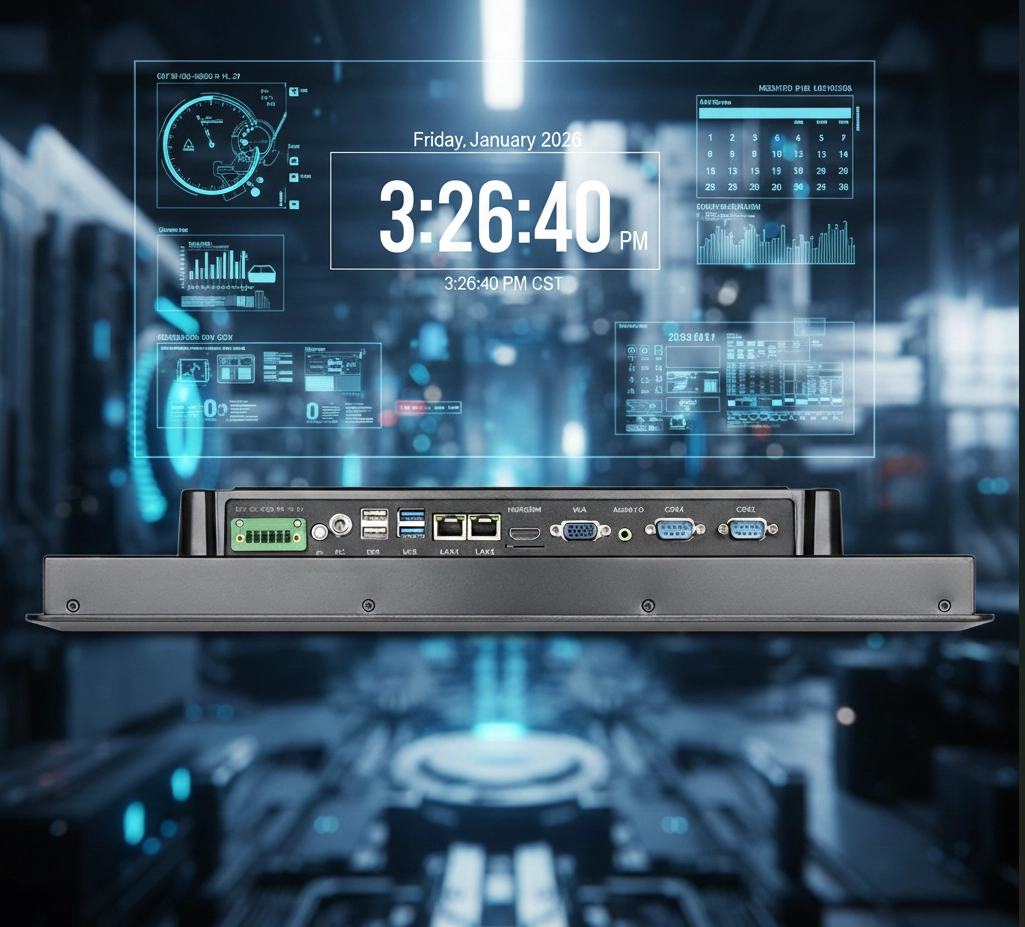
An Embedded Box PC is a compact, fanless, and rugged industrial computer designed for 24/7 operation in demanding environments. These devices are commonly used in smart buildings, industrial automation, and transportation due to their reliability and flexible deployment options.
Key features:
- Fanless design to ensure silent operation and dust resistance
- Wide operating temperature support (e.g., -20°C to 60°C)
- Rich I/O support including COM, LAN, USB, and DI/DO ports
- Mounting options like DIN-rail or wall-mount
How It Supports Building Automation and Data Integration
Embedded Box PCs serve as central control and data aggregation units in smart buildings:
- Supports Modbus, BACnet, MQTT, and other standard protocols
- Performs real-time data collection from meters and controllers
- Hosts BMS or SCADA software for unified monitoring and control
They can also interface with cloud platforms to upload analyzed data, enabling remote access and AI-powered insights.
Comparison with Traditional Controllers
| Fonctionnalité | Traditional PLC/Controllers | Box PC embarqué |
|---|---|---|
| Expansion | Fixed I/O modules | Modular with USB/COM/LAN expansion |
| Protocol Support | Limited, vendor-specific | Multi-protocol & IoT ready |
| Compatibilité avec les systèmes d'exploitation | Proprietary firmware | Windows/Linux support |
| Visualization | Minimal or external required | Native UI or web-based dashboards |
This makes Embedded Box PCs the preferred platform for future-proof smart building infrastructure.
Applications and Technical Requirements in Energy Monitoring
Multi-Protocol Integration: Modbus, BACnet, MQTT
In a building environment, devices from different vendors communicate through various protocols. A versatile Box PC supports simultaneous handling of:
- Modbus RTU/TCP for meters and HVAC
- BACnet/IP for building automation systems
- MQTT for IoT cloud integration
| Protocol | Application Field | Fonctionnalité |
|---|---|---|
| Modbus | Energy meters, HVAC | Simple, widely supported |
| BACnet | BAS control systems | Standardized for buildings |
| MQTT | IoT data transmission | Lightweight, fast, scalable |
IoT Sensor Data Collection and Edge Processing
Box PCs process environmental data from sensors monitoring:
- Consommation électrique
- Temperature and humidity
- Equipment operation status
This enables:
- Real-time alerts on abnormal conditions
- Reduced network traffic (only processed data sent)
- Faster decision-making via local analytics
Real-time Monitoring, Analysis, and Remote Management
Smart energy platforms depend on Box PCs for:
- Displaying real-time energy dashboards
- Auto-generating alerts based on thresholds
- Remote diagnostics and firmware updates via VPN or cloud tools
These features significantly enhance energy visibility and response time.
Key Selection Criteria for Smart Building Box PCs
Fanless Design and Industrial Durability
For deployment in ceilings, control rooms, or utility areas, the Box PC must be:
- Fanless and dust-resistant
- Wide temperature range compatible
- Vibration and interference resistant
- Enclosed in corrosion-resistant housing
Rich I/O Interfaces and Expansion Flexibility
| I/O Type | Cas d'utilisation typique |
|---|---|
| Ports COM | Meters, PLCs, HVAC controllers |
| LAN Ports | Networked devices, cloud upload |
| USB Ports | Sensor modules, storage devices |
| DI/DO | Device status and control signals |
| PCIe/Mini PCIe | Add-on for Wi-Fi, 4G, storage |
Mounting options like DIN rail and wall mount also facilitate flexible installation.
Software Integration and Customization Support
When choosing a platform, consider:
- OS compatibility: Windows/Linux for application flexibility
- Developer-friendly BSP or SDK availability
- Long-term support and stable supply
- Customizable configurations for special requirements
OEM/ODM support is critical for projects requiring tailored I/O or enclosure designs.
FAQ: Common Questions from Smart Building Integrators
How many protocols can a Box PC support?
Most industrial-grade Embedded Box PCs support multiple simultaneous communication protocols such as Modbus, BACnet, MQTT, OPC UA, and SNMP. They act as gateways and protocol converters, enabling interoperability across heterogeneous systems.
Are special designs needed for control rooms or outdoor spaces?
Yes. The Box PC should feature:
- Fanless, sealed design for dust protection
- Wide-temperature range operation
- Vibration and EMI-resistant hardware
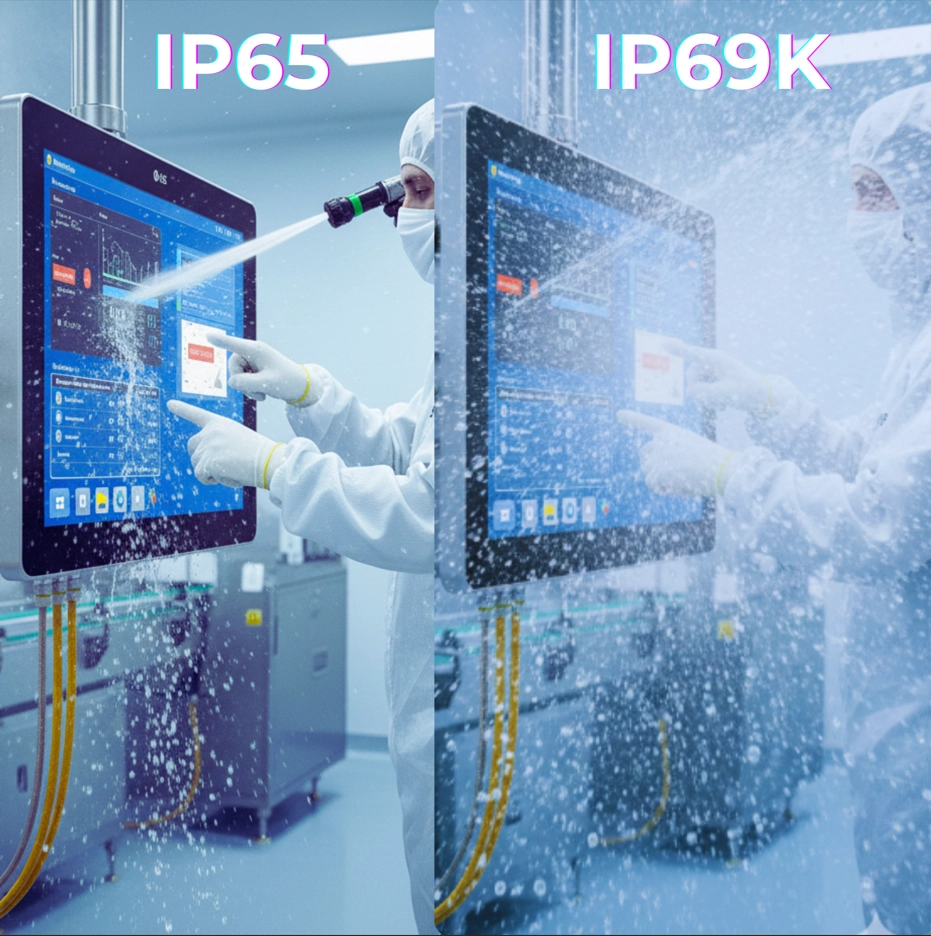
- Optional IP-rated enclosures for harsh or outdoor conditions
Are Box PCs suitable for retrofitting existing buildings?
Absolutely. Box PCs are compact and can integrate with existing infrastructure:
- Compatible with legacy Modbus/BACnet devices
- Minimal wiring changes required
- Easy to install and scale with minimal disruption
Beyond Info System Solutions for Smart Buildings
Company Overview and Technical Strength
Au-delà du système d'information is a leading industrial computing manufacturer, offering rugged and scalable solutions including:
- Fanless embedded PCs
- Military-grade touch panels
- Industrial displays
Key strengths:
- Strong OEM/ODM customization capability
- Long-term availability and stable BOM
- Multi-protocol integration support
- Global certifications (CE/FCC/EMC)
Recommended Box PC Products
| Modèle | Caractéristiques | Application |
|---|---|---|
| BIS-APL-Fanless | Intel CPU, Modbus/BACnet support, fanless | Meter/HVAC integration |
| BIS-TG-IOT | 4G/Wi-Fi ready, Linux/Windows OS support | IoT gateway, cloud sync |
| BIS-DIN-Rail | DIN mount, wide temperature, rich I/O | Control panel environments |
| BIS-Custom ODM | Custom I/O, enclosure, software | Special building projects |
Explore more: Série Embedded Box PC
Customization & Contact Information
Beyond Info System welcomes system integrators and project developers for OEM/ODM collaboration:
- 📧 Email: inquiry@beyondinfosys.com
Contact us via our Online Form for technical consultations and quotations.