Tendenze dell'informatica industriale 2026: Come l'intelligenza artificiale dei bordi sta trasformando l'architettura dei sistemi embedded
The year 2026 marks a watershed moment in the evolution of Industrial Computing (IPC). We have moved beyond the era of simple automation into the era of Autonomous Industrial Intelligence. At the heart of this transformation is Edge AI, a technology that is fundamentally rewriting the blueprint of embedded system architecture.
The 2026 IPC Pivot: From “Automation” to “Autonomy”
Defining Edge AI: Why Embedded Systems are No Longer Just Terminals
For decades, embedded systems were designed as “passive executors.” They collected data and sent it to a central server, or executed rigid, pre-programmed logic. If a sensor detected a temperature spike, the system tripped a circuit.
In 2026, the definition of an embedded system has shifted. Powered by Edge AI, these systems are now “active decoders.” They possess the onboard intelligence to process complex data patterns—such as high-speed video frames or multi-axis vibration data—locally. The system doesn’t just report a problem; it understands the context, predicts the failure, and adjusts parameters in real-time without waiting for a command from the cloud.
2026 Market Outlook: Architecture Restructuring under Industry 5.0
Industry 5.0 has introduced a human-centric approach to manufacturing, emphasizing resilience and sustainability. This requires IPCs to act as Multi-Tasking Intelligence Hubs. We are seeing a massive restructuring where traditional, single-purpose controllers are being replaced by modular, high-compute architectures capable of running containerized AI models alongside legacy PLC (Programmable Logic Controller) functions.
How Edge AI Computing Upends Traditional Embedded Architecture
The Evolution of Computing Cores: The Rise of the NPU
In 2026, the “heart” of the IPC is no longer judged solely by CPU clock speed. The industry has moved toward a Heterogeneous Computing Model.
| Componente | Traditional Role (Pre-2024) | 2026 AI Architecture Role |
| CPU (Central Processing Unit) | Primary logic and system control. | System “Manager”—handles I/O coordination and general logic. |
| GPU (Graphics Processing Unit) | UI rendering and basic video tasks. | Parallel processor for complex vision algorithms and metadata. |
| NPU (Neural Processing Unit) | Rare in industrial settings. | The Core Engine: Dedicated silicon for deep learning inference at ultra-low power. |
The integration of the NPU into standard embedded chipsets allows for a 10x increase in AI inference speed while reducing power consumption by 40% compared to traditional CPU-only processing.
Latency and Bandwidth Optimization: The Case for Local Decision-Making
As industrial IoT (IIoT) sensors multiply, the volume of data generated on the factory floor has reached a breaking point. Sending raw 4K video streams from 100 cameras to the cloud is neither cost-effective nor technically feasible due to bandwidth limitations.
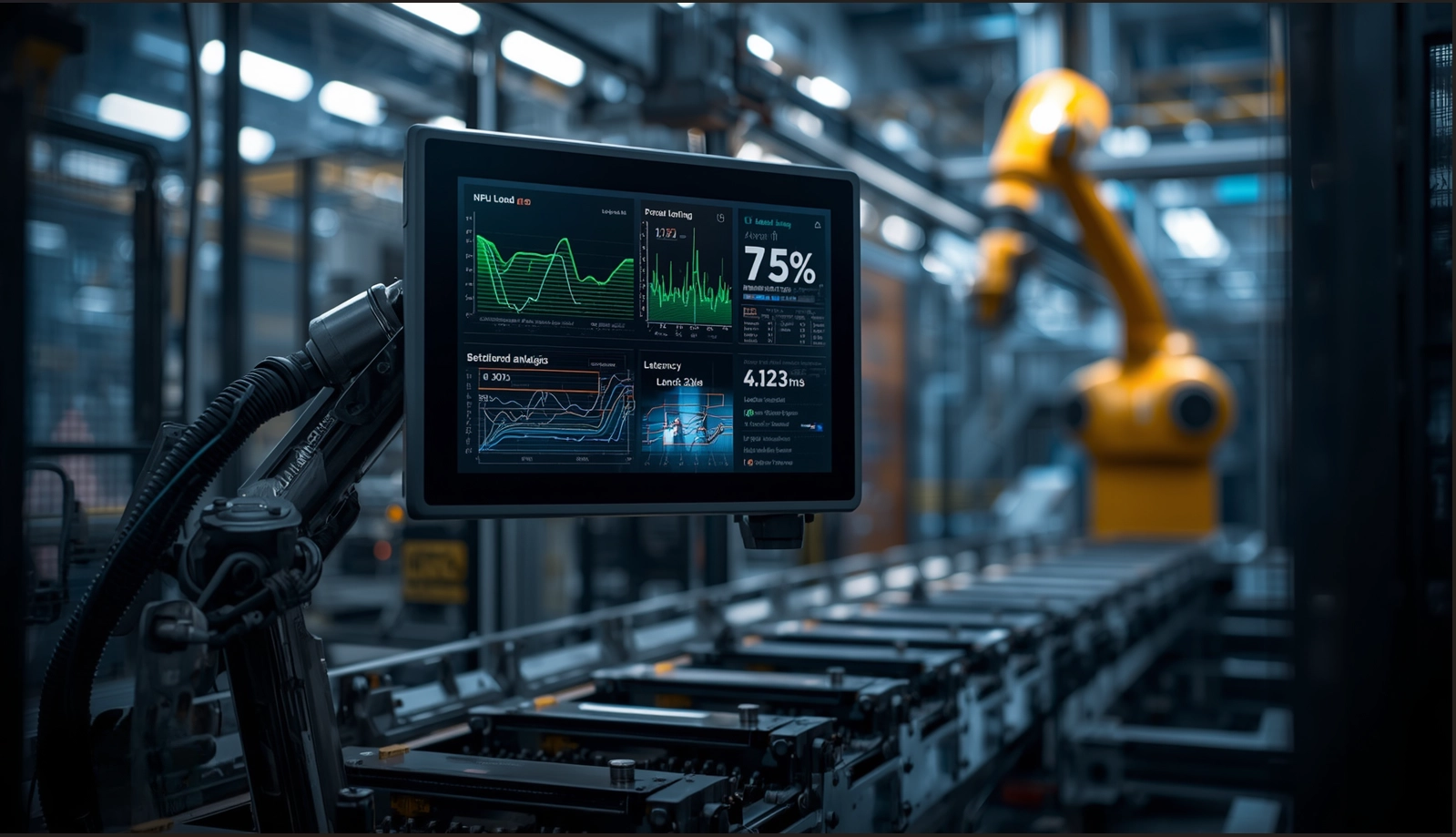
2026 architecture prioritizes Local Inference. By processing data at the edge, IPCs reduce network traffic by over 70%. More importantly, critical safety decisions—such as stopping a robotic arm when a human enters the zone—now happen with a latency of less than 5 milliseconds, a feat impossible with cloud-dependent systems.
Thermal and Energy Challenges: New Hardware Design Benchmarks
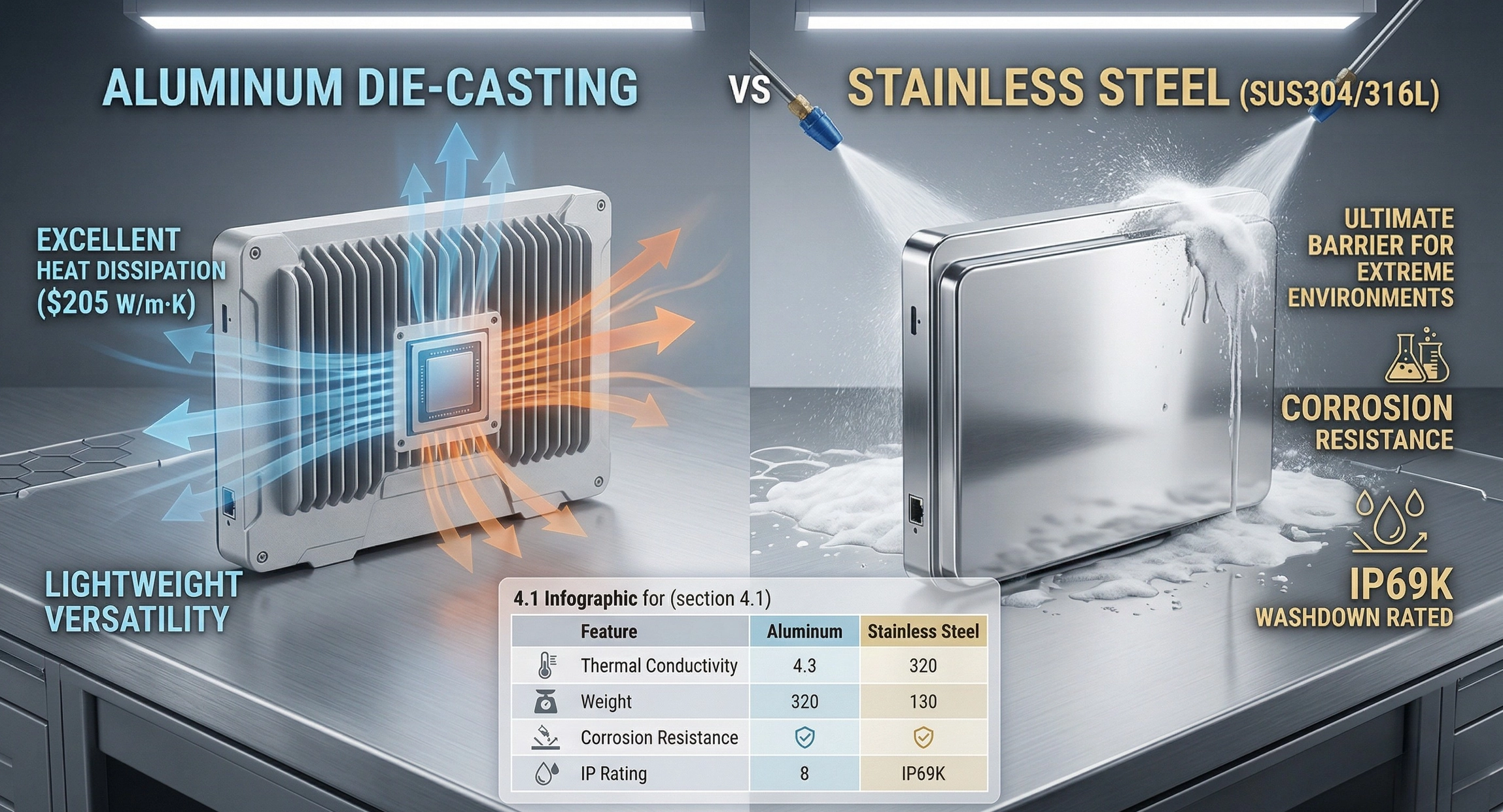
High-performance AI computing generates significant heat. In 2026, the “Fanless” design remains the gold standard for industrial reliability, but it has evolved. We now see advanced Phase-Change Materials (PCM) and innovative chassis designs that act as massive heat sinks to dissipate the thermal load of NPUs and high-speed NVMe storage without the risk of mechanical fan failure.
AI-Driven Innovations in Touch Panels and HMI
Intelligent Vision Integration: Displays that “See”
In 2026, an Industrial Touch Panel is no longer just an output device. Modern Human-Machine Interfaces (HMI) are now integrated with AI-powered vision systems.
- Safety Monitoring: The HMI uses its built-in camera to verify if an operator is wearing the required Personal Protective Equipment (PPE) before allowing the machine to start.
- Biometric Access: Gone are the days of forgotten passwords or lost ID cards; facial recognition provides secure, tiered access levels instantly.
Intuitive Interaction: AI Voice and Gesture Control
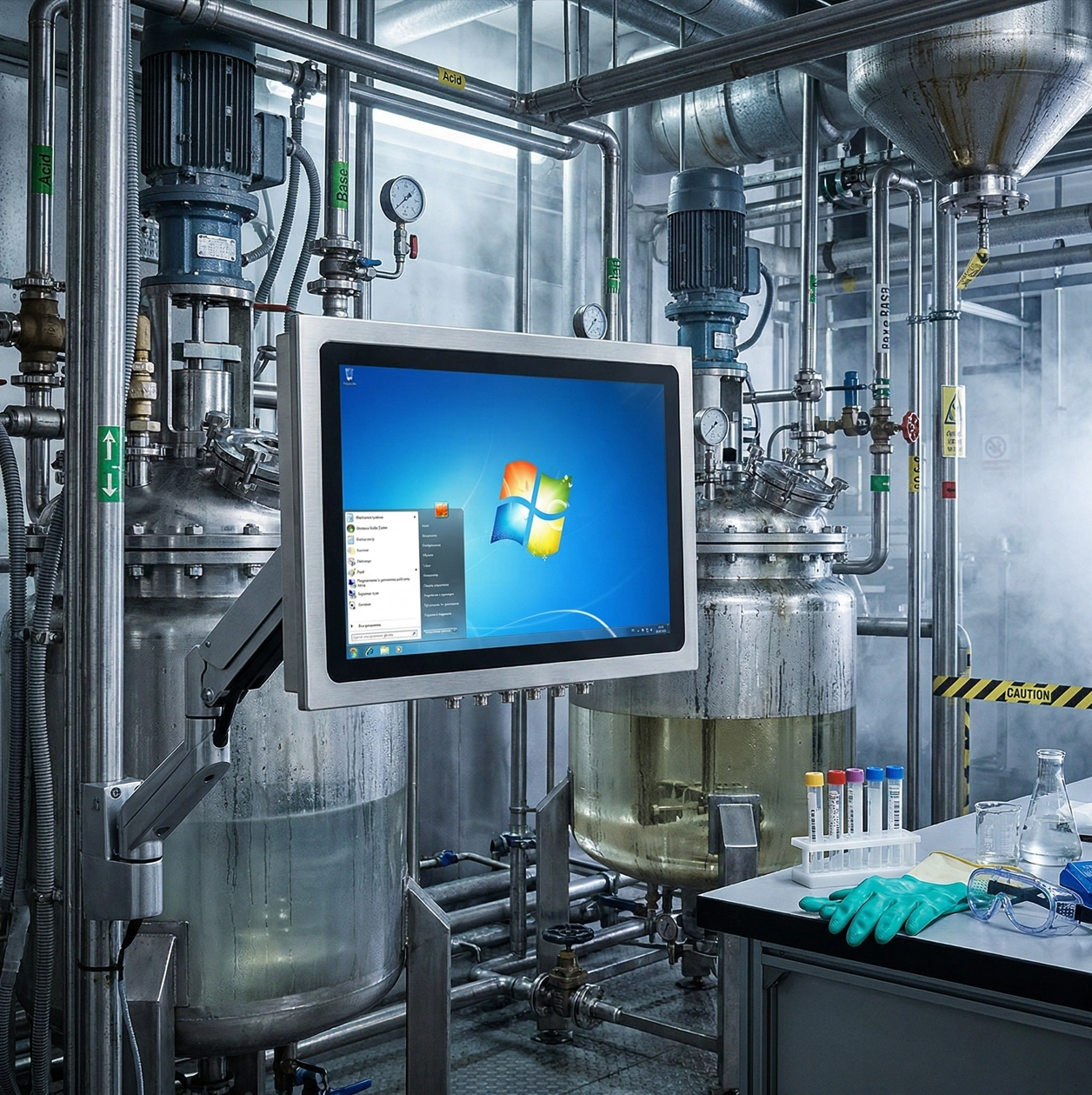
In environments where operators wear thick gloves or work with hazardous materials, physical touch can be difficult. 2026 IPCs utilize Natural Language Processing (NLP) and gesture recognition. An operator can simply say, “Show me the pressure history of Tank B,” or use a hand wave to scroll through schematics, significantly increasing operational efficiency.
Vertical Market Breakthroughs for Edge AI IPCs
Smart Manufacturing: AOI and Predictive Maintenance
- Advanced AOI (Automated Optical Inspection): Traditional AOI looked for “pass/fail.” 2026 AOI, powered by Edge AI, identifies why a part failed (e.g., a specific nozzle alignment issue), feeding that data back to the upstream machine to self-correct.
- Predictive Maintenance: By analyzing ultrasonic frequencies from motors, IPCs can detect microscopic bearing wear weeks before a breakdown occurs, saving factories millions in unplanned downtime.
Smart Retail and Healthcare: Precision via the Edge
- Vendita al dettaglio: IPCs drive interactive kiosks that recognize customer demographics and sentiment, adjusting digital signage in real-time to maximize engagement.
- Assistenza sanitaria: In medical imaging, embedded systems assist surgeons by highlighting anomalies in real-time during endoscopy or laparoscopic surgery, requiring 100% uptime and zero-latency processing.
Securing the Edge: Hardware-Level Protection for AI
Edge Security Architecture: From Boot to Data Transmission
As AI models become a company’s most valuable IP, protecting them is paramount. 2026 architectures utilize Hardware Root of Trust (RoT). This ensures that the firmware and the AI models themselves are cryptographically signed and cannot be tampered with. Even if a device is physically stolen, the data on the edge remains encrypted and inaccessible.
System Stability: Ruggedized Design for Extreme Environments
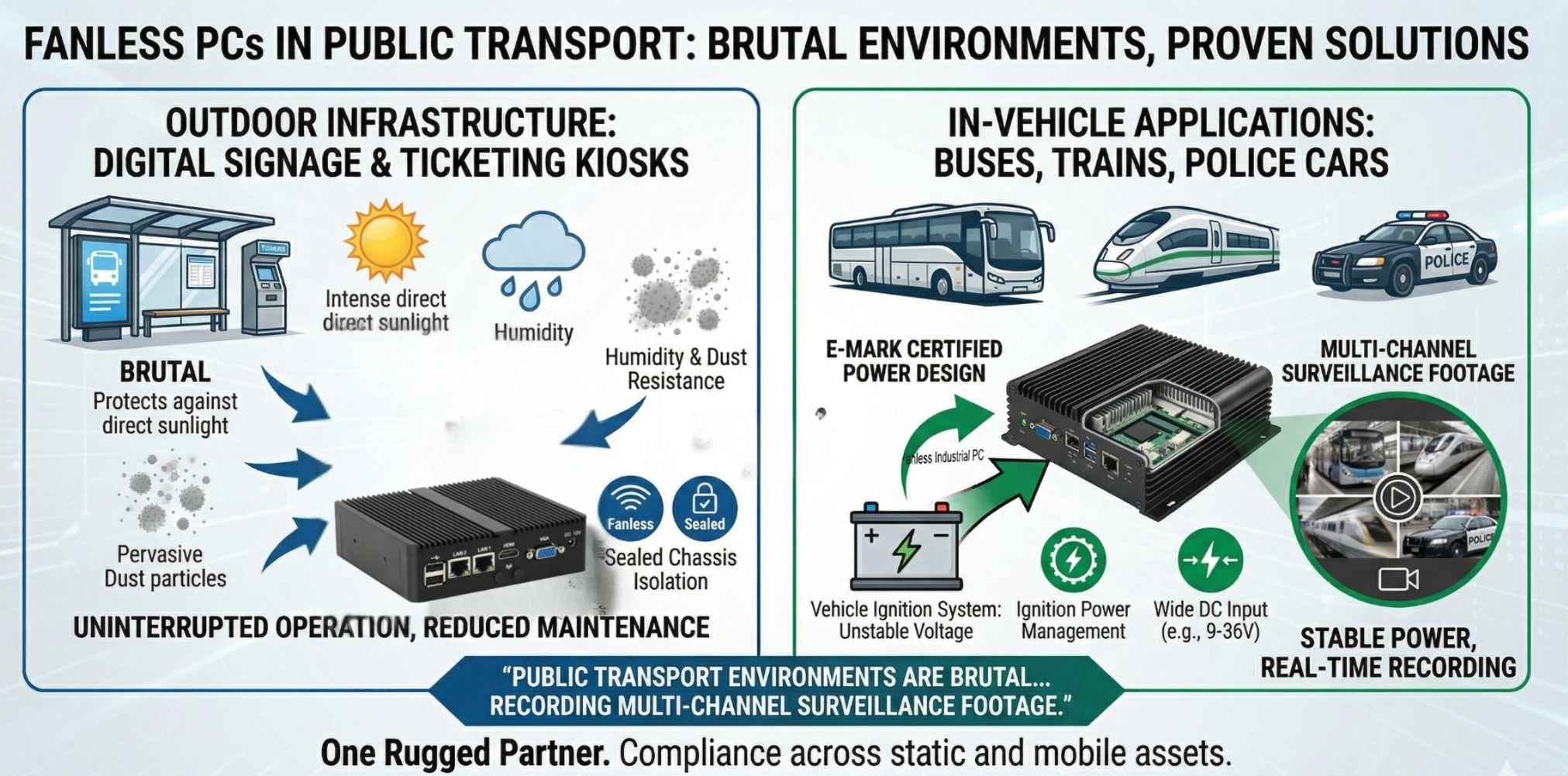
The deployment of AI is moving to the “far edge”—outdoor oil rigs, autonomous mining trucks, and high-speed trains. 2026 IPCs must meet stringent MIL-STD-810H standards, offering wide-temperature support (-40°C to 85°C) and high vibration resistance to ensure that AI intelligence doesn’t fail when the environment gets tough.
FAQ: Industrial Computing & Edge AI in 2026
Q1: What is the most critical hardware component to upgrade for AI compatibility?
The most critical upgrade is the transition to an AI-optimized SoC (System on Chip) that includes a dedicated NPU. Furthermore, ensuring you have sufficient high-speed memory (LPDDR5x) and PCIe 5.0 expansion slots for modular AI accelerators is essential for future-proofing.
Q2: How does Edge AI contribute to ESG (Environmental, Social, and Governance) goals?
Edge AI improves energy efficiency by optimizing machine cycles and reducing scrap waste through better quality control. By processing data locally, companies also significantly reduce the massive energy consumption associated with large-scale data center cooling and transmission.
Q3: Can existing legacy industrial systems be retrofitted with AI?
Yes. The 2026 trend involves using AI Gateway IPCs. These compact devices sit between legacy machines and the network, “sniffing” data via I/O or protocol conversion and applying AI logic before passing the information upward.
Leading the Edge AI Revolution: Beyond Info System
About Beyond Info System: Your Trusted OEM/ODM Partner
As a premier provider in the IPC industry, Oltre il sistema informativo understands that the shift to AI requires more than just off-the-shelf hardware. We specialize in providing tailored embedded solutions that bridge the gap between complex AI requirements and rugged industrial realities. With deep expertise in Europe and Latin American markets, we empower businesses to navigate the 2026 IPC landscape with confidence.
Core Product Portfolio: Built for the Future of AI
- High-Performance AI Edge Controllers: Our latest series features integrated NPU acceleration, designed specifically for heavy-duty AI vision and real-time inference.
- PC touch panel industriali: Rugged, IP-rated displays that serve as the intelligent HMI for the next generation of smart factories.
- Customized Embedded Motherboards: We provide OEM/ODM services to create bespoke board designs, focusing on specific I/O needs, wide-temperature resilience, and long-term availability (up to 10-15 years).
Connect With Us
Are you ready to redefine your industrial architecture for the AI era? Explore our technical specifications and case studies.