n the modern era of hyper-convenience driven by e-commerce, the physical retail store is no longer just a place to display goods; it has evolved into a hub for “experiences.” To compete with the click-and-buy nature of the internet, brick-and-mortar retailers must merge the digital and physical worlds. The most effective tool for this transformation? The Interactive Industrial Display.
Far beyond a mere television screen on a wall, these robust, high-performance devices are the backbone of Smart Retail, acting as the primary interface between the brand and the modern consumer.
The New Era of Smart Retail: Why Interaction is the Key to Success
The retail landscape has shifted from passive consumption to active engagement. Today’s consumers expect information at their fingertips, personalized recommendations, and a frictionless checkout process.
From Passive Reception to Active Participation: The Digital Transformation of UX
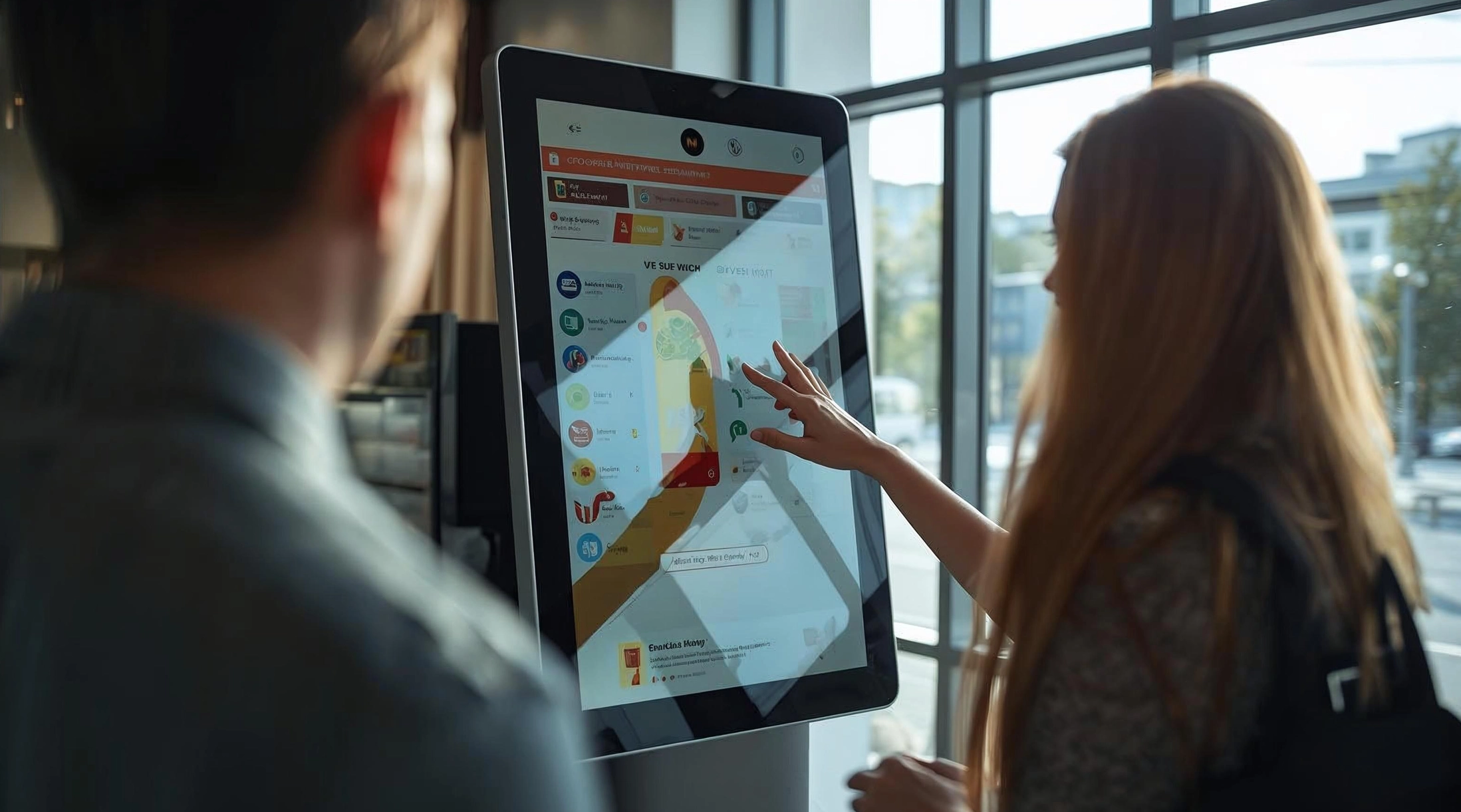
Traditional static signage is a one-way street. It broadcasts a message and hopes someone listens. Interactive displays, however, create a two-way dialogue. By integrating Interactive Industrial Displays, retailers can empower customers to take control of their journey.
- OMO (Online-Merge-Offline) Integration: Modern consumers often research online before visiting a store. Interactive kiosks allow them to scan QR codes to save items to their online wishlists or check real-time stock levels across multiple branches, creating a seamless omnichannel experience.
- Boosting Customer Engagement: When a customer can rotate a 3D product model, watch a styling video, or compare technical specs on a high-definition touch screen, their “dwell time” (time spent in-store) increases significantly. Data shows that higher engagement directly correlates with higher conversion rates and larger basket sizes.
Addressing Post-Pandemic Retail Challenges: Automation and Labor Shortages
The global retail industry is facing a dual crisis: rising labor costs and a shortage of frontline staff. Interactive technology provides a scalable solution to maintain service quality without increasing headcount.
| Traditional Retail Pain Points | Smart Interactive Solution | Business Value (ROI) |
| Long queues causing customer churn | Self-Service Ordering/Check-out Kiosks | Reduced wait times & increased throughput |
| High cost of printing & replacing paper ads | Remote CMS Digital Content Updates | Instant promotions & zero material waste |
| Lack of data on customer preferences | Touch-Data Behavioral Analytics | Informed decision-making for inventory |
Industrial Displays vs. Commercial TVs: Common Misconceptions
A frequent mistake made by retailers is opting for consumer-grade TVs or basic commercial monitors to save on initial costs. However, the retail environment is unforgiving. Here is why “Industrial Grade” is the true secret weapon for long-term profitability.
The Durability Duel: 24/7 Continuous Operation and MTBF
A household TV is designed to run for 6 to 8 hours a day. In a retail setting, displays often need to run 24/7. Consumer screens used in this manner quickly succumb to:
- Image Persistence (Burn-in): Static menus or logos become permanently ghosted on the screen.
- Component Failure: Overheating and lack of industrial-grade capacitors lead to a shortened lifespan.
Industrial displays are engineered with superior thermal management and heavy-duty components, boasting a much higher MTBF (Mean Time Between Failures). This reliability ensures that your “digital salesperson” never takes an unscheduled sick day.
Environmental Adaptability: IP65 Rating and High-Brightness Technology
Unlike a controlled living room environment, retail spaces vary wildly:
- High-Brightness Displays: For storefront windows facing the street, standard screens become invisible due to glare. Industrial displays with $1000$ to $2500$ $nits$ of brightness ensure content remains vivid even under direct sunlight.
- IP65 Protection: In food service or high-traffic areas, screens face dust, grease, and accidental liquid splashes. An IP65-rated front bezel protects the sensitive internal electronics, allowing for easy cleaning and long-term hygiene.
Core Technology: The Superiority of P-CAP Touch
The “feel” of a touch screen is the digital handshake between your brand and your customer. If the response is sluggish or inaccurate, the brand image suffers.
Precision Touch and Multi-point Interaction for Wayfinding
Projected Capacitive (P-CAP) touch technology is the gold standard for smart retail. It offers the same fluid, intuitive experience users have come to expect from their smartphones.
Seamless Wayfinding: In large shopping malls, P-CAP screens allow users to pinch-to-zoom on maps and swipe through directories with zero lag, reducing the frustration of navigating complex spaces.
Multi-User Interaction: Modern P-CAP controllers support up to 10 or more simultaneous touch points, enabling collaborative games or shared browsing experiences that can entertain groups of shoppers.
Scratch Resistance and Anti-Reflective Coatings
Retail hardware must be “ruggedized” for public use.
7H Mohs Hardness: Industrial touch glass is chemically strengthened to resist scratches from keys, rings, or coins.
Optical Enhancements: By applying AG (Anti-Glare) or AR (Anti-Reflection) coatings, retailers can eliminate distracting reflections from overhead store lighting, ensuring that the focus remains entirely on the products being displayed.
Diverse Application Scenarios: From Wayfinding to Virtual Try-ons
The versatility of the interactive industrial display allows it to be molded into various specialized retail tools.
Digital Mirrors and Intelligent Shelf Edges
- Virtual Try-on (Magic Mirrors): By combining high-definition industrial displays with cameras and AR software, customers can “try on” makeup, glasses, or clothing virtually. This speeds up the decision process and reduces the logistical burden of handling physical samples.
- Digital Shelf Edges (Bar Displays): Replacing traditional paper tags with ultra-wide bar-type displays allows for dynamic pricing and the ability to show short product videos right at the point of purchase.
Data as the New Currency: The Hidden Value of Interaction
Every touch on the screen is a data point. Interactive displays serve as powerful data collection terminals.
- Heatmap Tracking: Retailers can see which products are being explored most often, even if they aren’t purchased, providing insights that traditional POS systems miss.
- A/B Testing Content: Easily swap between two different promotional videos on different screens and track which one leads to more customer interactions.
Selection Guide: Choosing the Right Solution for Your Brand
Selecting the right hardware is a balance of performance, aesthetics, and integration.
Technical Specs: Brightness, Viewing Angles, and OS Compatibility
| Metric | Recommended Specification | Why it Matters |
| Luminance | $500$ $cd/m^2$ (Indoor) / $1500+$ $cd/m^2$ (Window) | Readability in high-ambient light |
| Viewing Angle | $178^\circ / 178^\circ$ (IPS/MVA) | Consistency of colors from all directions |
| OS Support | Windows / Android / Linux | Compatibility with existing CMS/POS software |
| Touch Tech | P-CAP (Projected Capacitive) | Modern, sleek, and highly responsive |
Scalability and Support for System Integrators (SI)
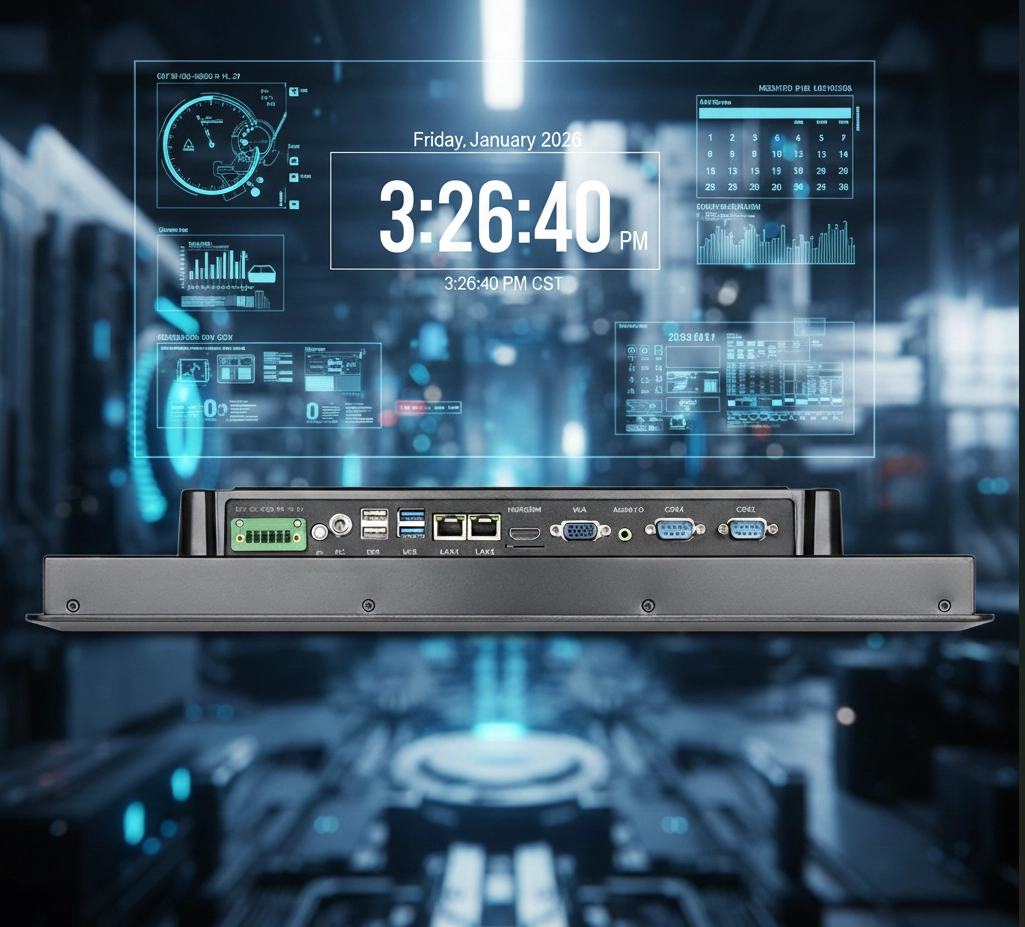
For large-scale deployments, the hardware must be easy to install and maintain. Standardized VESA mounting and a wide array of I/O ports (HDMI, DP, USB for touch) are essential. Furthermore, working with a manufacturer that offers long-term product availability ensures that if you expand your store in three years, you can still source the exact same model to maintain design consistency.
FAQ: Interactive Industrial Displays in Retail
Q1: Is the higher price of industrial displays justified?
Answer: Absolutely. When you factor in the Total Cost of Ownership (TCO), industrial displays are cheaper. They consume less power, require fewer repairs, and have a much longer functional life than consumer-grade alternatives. In retail, “down-time” is lost revenue; industrial displays minimize that risk.
Q2: How do I integrate these screens with my current POS or ERP?
Answer: Most professional industrial displays act as standard HID (Human Interface Device) peripherals. This means they are “plug-and-play” with Windows and Android systems. Software developers can easily map touch inputs to existing web-based or native retail applications.
Q3: How do you handle hygiene on public touchscreens?
Answer: Our P-CAP displays feature edge-to-edge true-flat surfaces with no bezels where bacteria can hide. They can be safely cleaned with standard alcohol-based disinfectants without damaging the touch sensitivity or the glass.
Professional Leadership: Beyond Info System Smart Retail Solutions
Navigating the transition to a smart retail environment requires a partner who understands the intersection of hardware reliability and consumer psychology.
About Beyond Info System (BIS): Your Trusted Partner
Beyond Info System (BIS) is a global leader in providing high-performance industrial display and touch computing solutions. We don’t just sell screens; we provide the foundational technology that empowers brands to tell their stories in the physical world. Our products are designed for the rigors of commercial use while maintaining a sleek, modern aesthetic that complements luxury and high-tech retail environments.
Featured Products for the Ultimate Retail Space
Explore our specialized product lines at www.beyondinfosys.com:
- P-CAP Touch Monitor Series: Ultra-slim designs with responsive multi-touch, perfect for sleek kiosks and point-of-sale systems.
- High-Brightness Sunlight Readable Displays: The ideal solution for window displays, ensuring your message pops even on the brightest days.
- Open-Frame & Embedded Solutions: For retailers looking to create custom furniture or integrated wall displays, our open-frame monitors offer the ultimate flexibility for architects and designers.
Elevate Your Retail Experience Today
Are you ready to turn your retail space into an interactive destination? The future of retail is personal, digital, and interactive.